Blog
Who was told, who acknowledged, what they did, and what proves it. One post per working day.
-
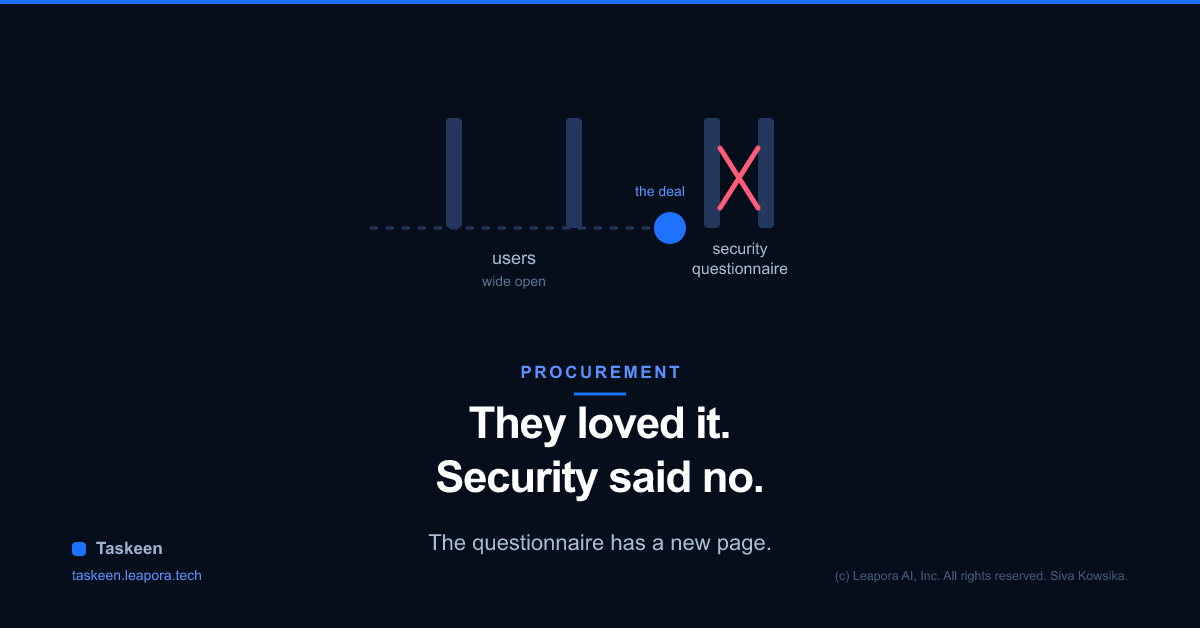
The Security Questionnaire Has a New Page
Deals are won with the users and lost on a document they never saw. The new questions are not about break-ins. They ask whether a system can account for itself.
-
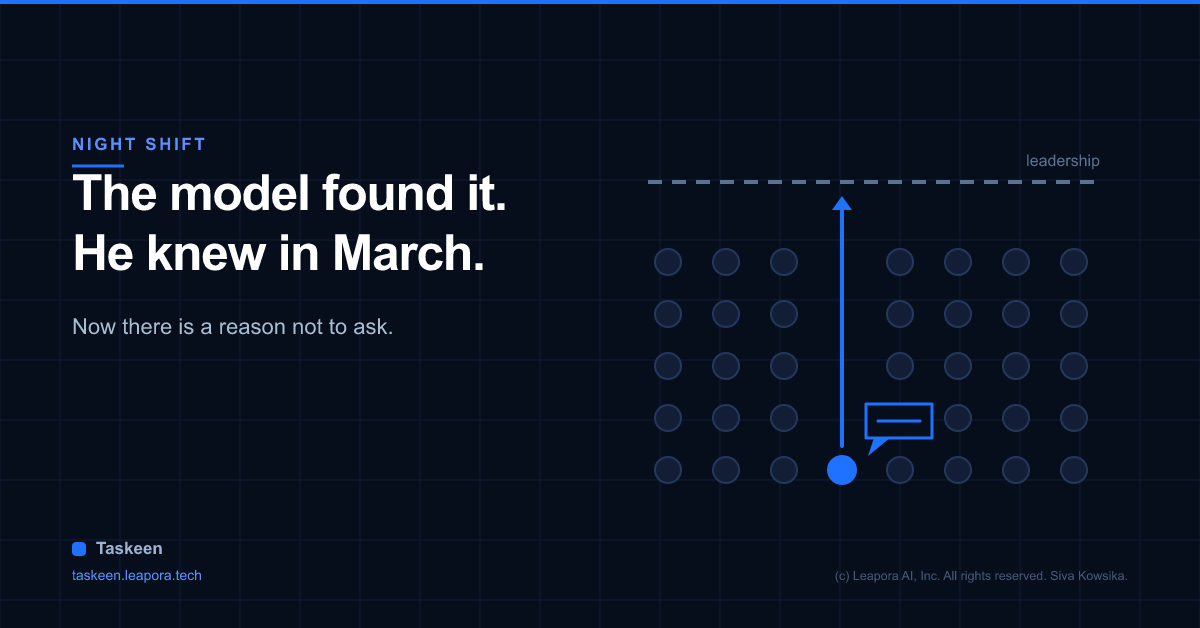
The Model Found It. He Knew in March.
A year of stoppages for information the business already held. The analytics did not know more than the supervisor. It arrived through a channel with standing.
-
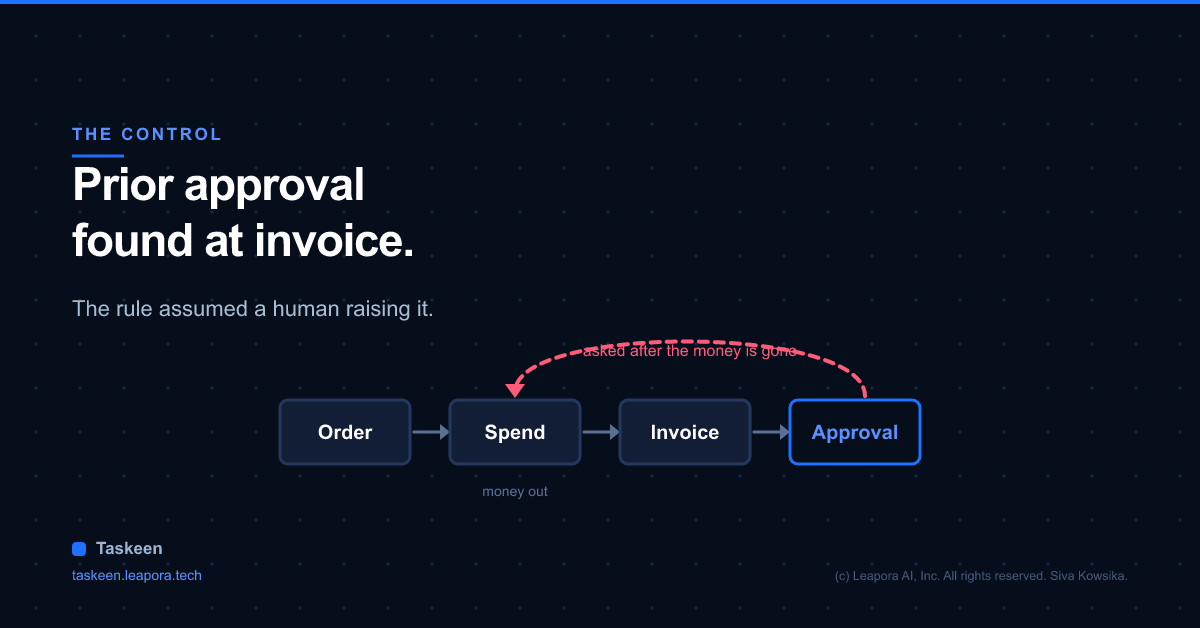
Your Spend Control Fires Too Late
The approval threshold assumes a person raising a requisition. Consumption-based AI tooling never raises one, so the control never gets the chance to fire.
-
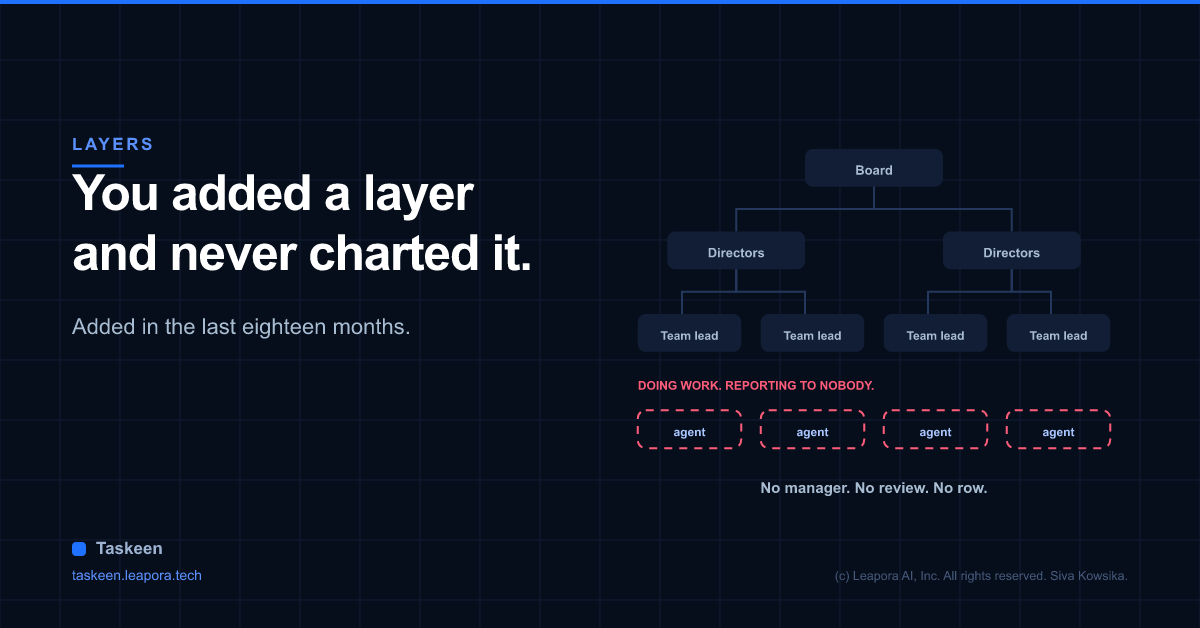
You Added a Layer and Never Charted It
AI agents receive instructions, act, and hand results upward. They have every property of an organisational layer except a manager, a review, and a row on the chart.
-
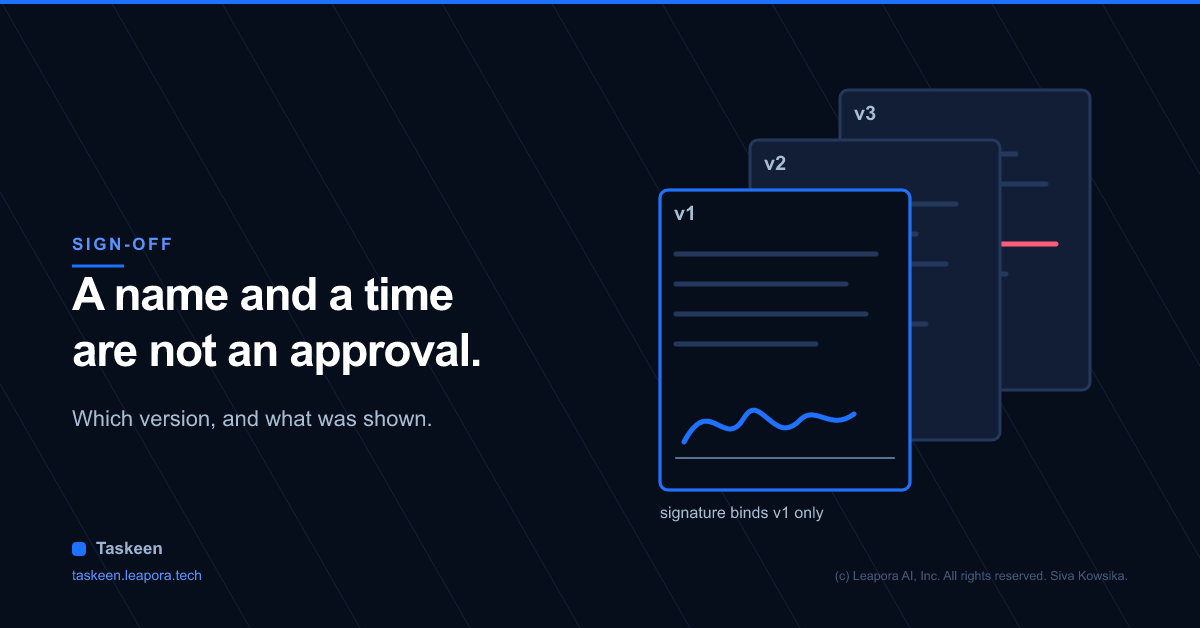
A Name and a Timestamp Are Not an Approval
Two of the three things that matter are missing from most approval records: which version was approved, and what the approver was actually shown of it.
-
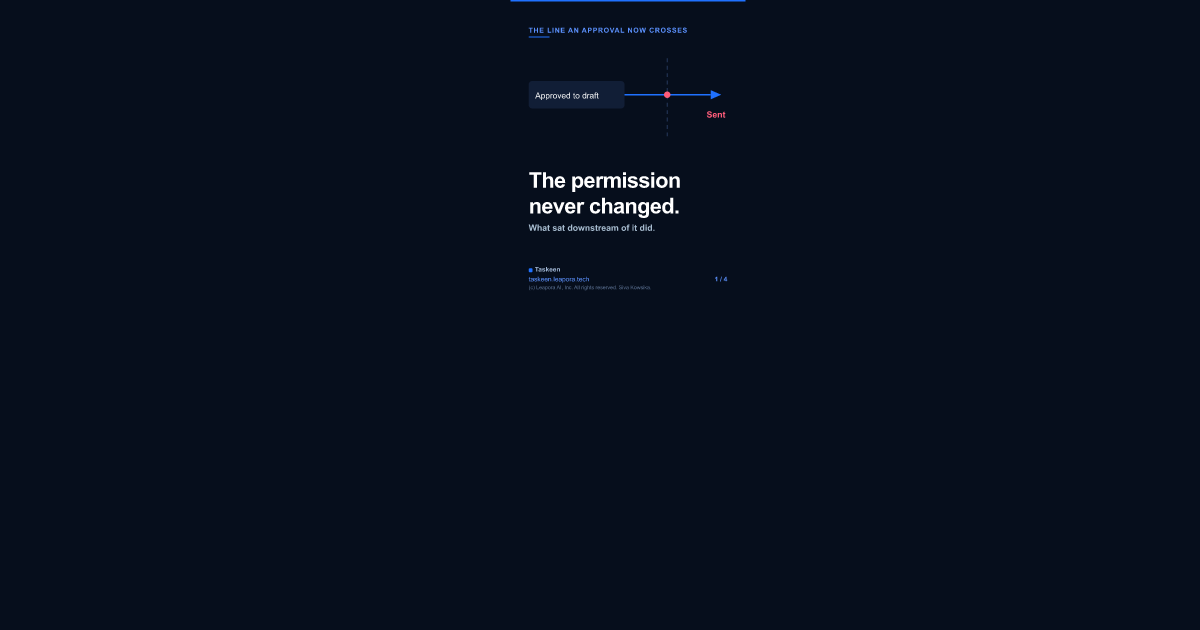
The Permission Never Changed
A step was approved to draft. Somebody later automated the step after it, and the draft now goes out. Nobody edited the approval.
-
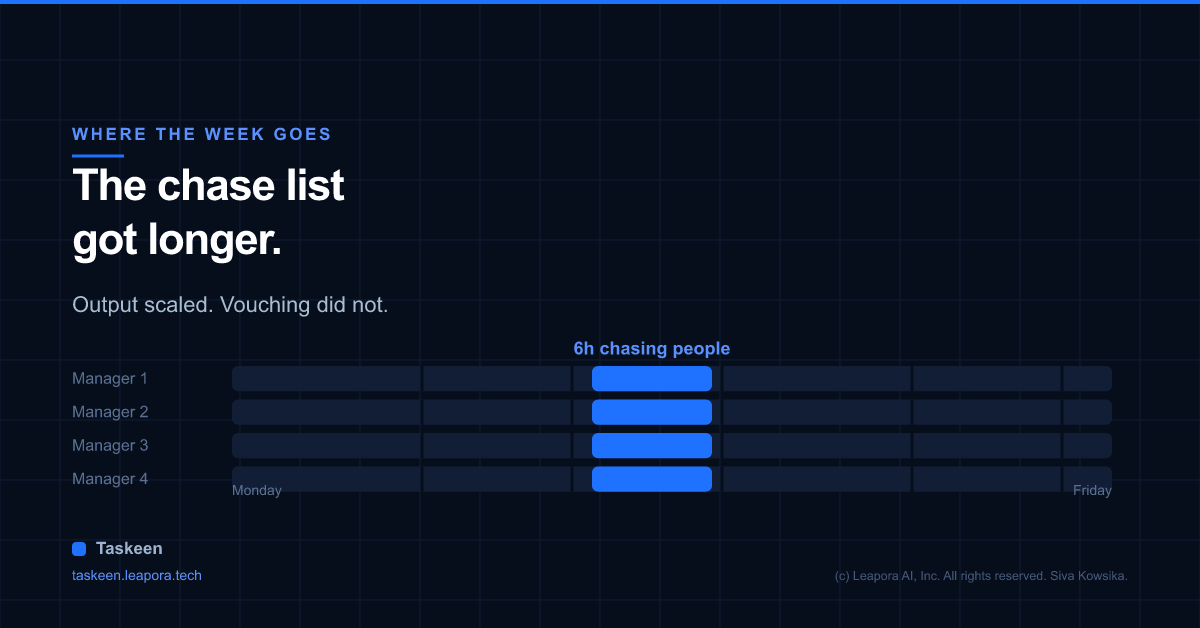
Why Your Chase List Got Longer
Output scaled with the tools. The number of people who can vouch for it did not. The ratio moved hard in one direction, and the overflow is invisible.
-
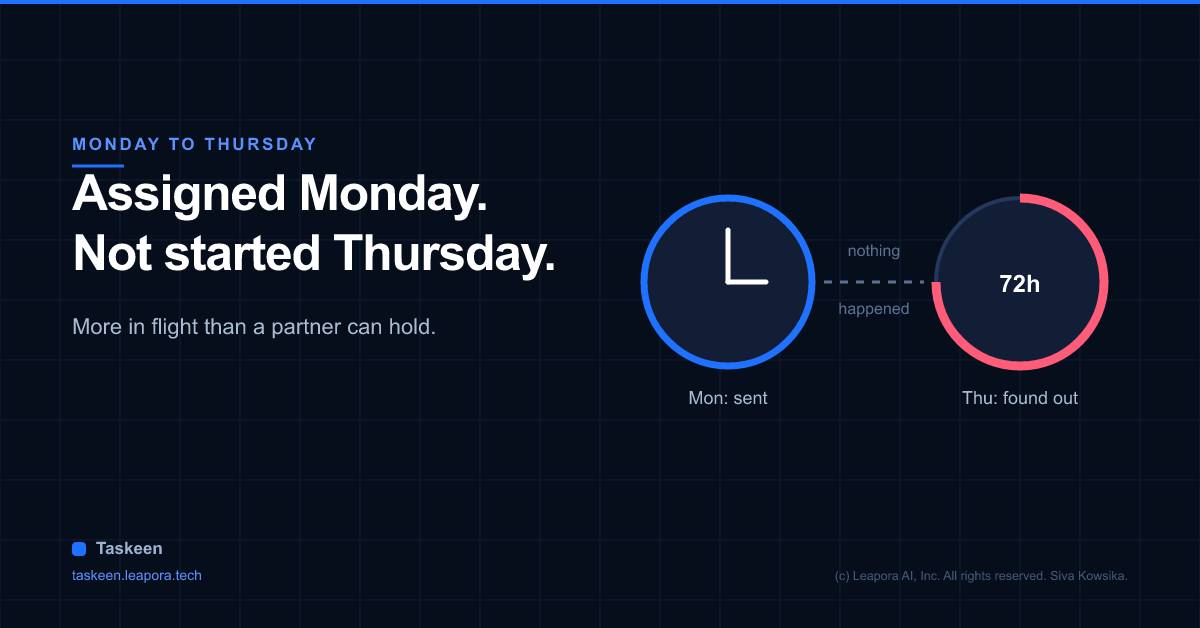
Assigned Monday, Not Started Thursday
Nobody dropped anything. Drafting got fast, items in flight went up, and the constraint moved onto the one thing that did not speed up: a partner's attention.
-
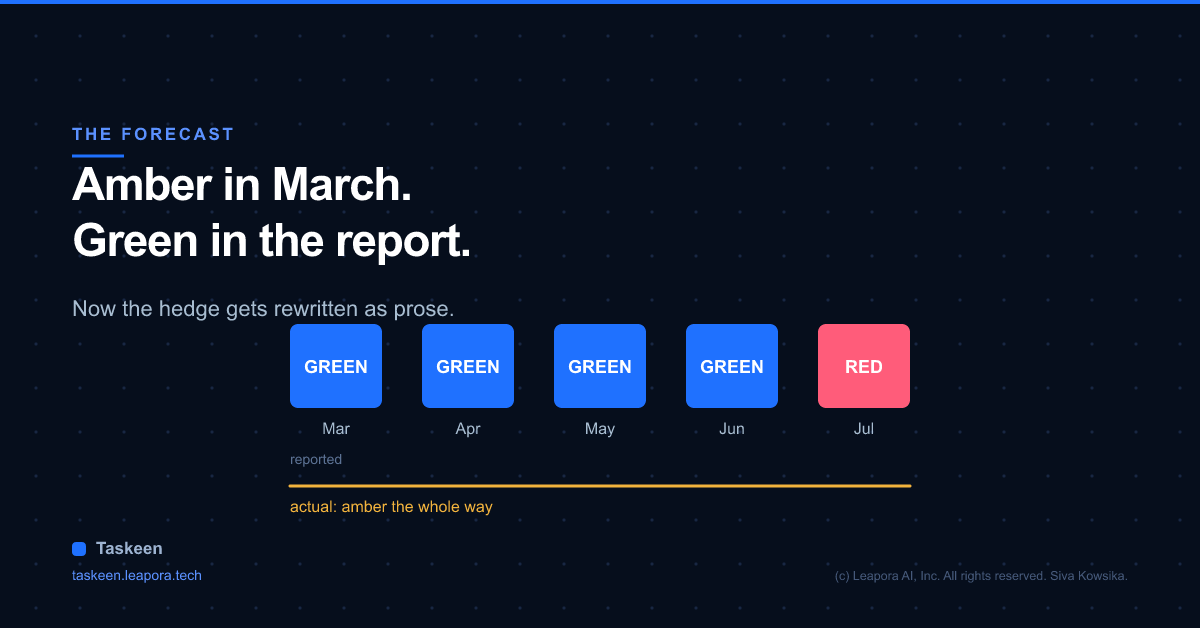
When a Status Report Stops Telling You Anything
You never read the status. You read the person writing it. Generated prose is more confident than its input, and the signal you were discounting is gone.
-
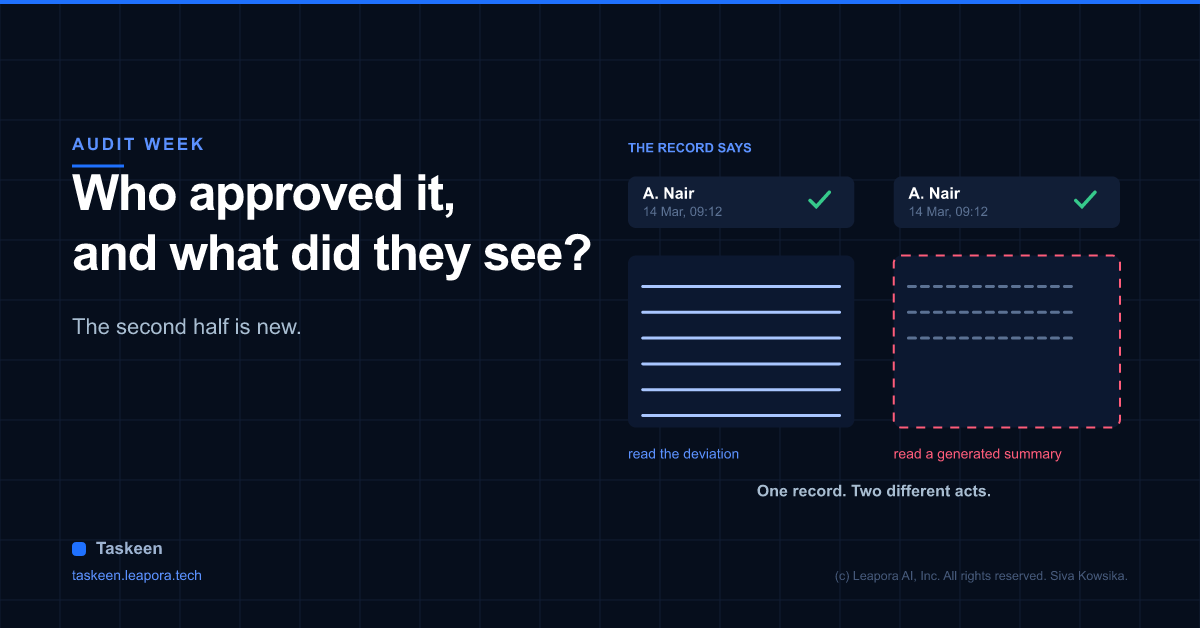
What Did the Approver Actually See?
A name and a timestamp used to stand in for a judgement. Once a model drafts the rationale, an approval record can no longer tell the two acts apart.
-
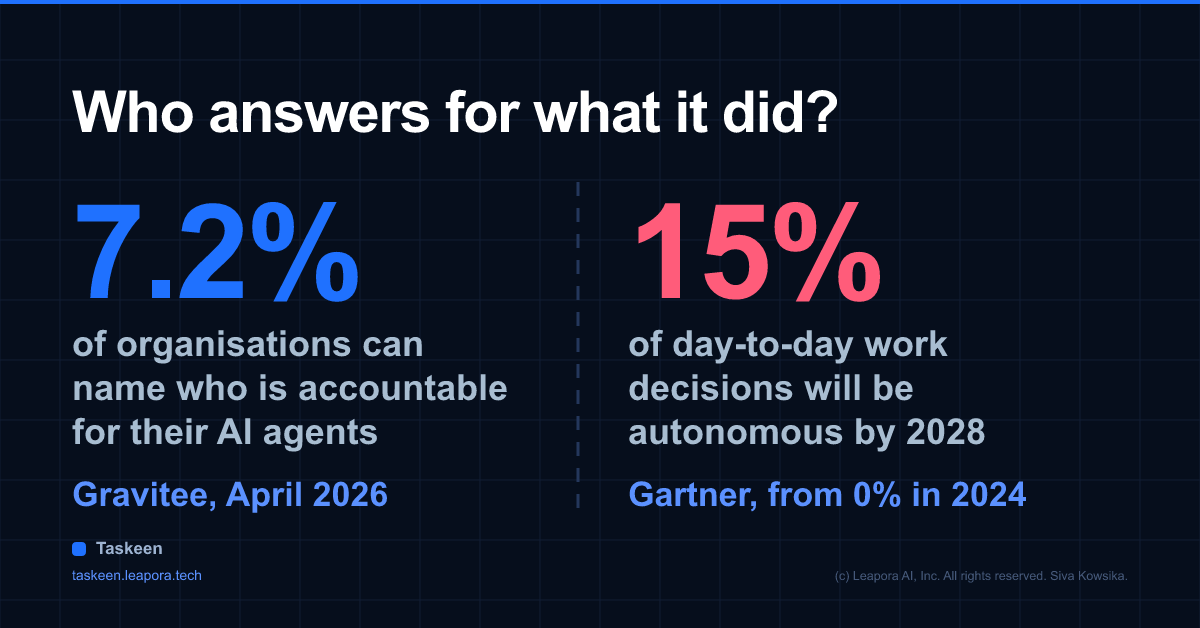
Who Answers for What Your AI Agents Do
Only 7.2 percent of organisations have a named person accountable for their AI agents, while Gartner expects 15 percent of work decisions to be autonomous by 2028.